
A few years ago, I saw a LinkedIn Daily Rundown story about Elon Musk unseating Bill Gates as the second-richest man in the world, according to Bloomberg Business Review.
Being the detail-oriented person that I am, I wasn’t just going to take LinkedIn’s word for it. I clicked through to the original article on Bloomberg’s website to confirm. Sure enough, the news checked out.
Then I closed the tab, opened Facebook Messenger, and started answering chats.
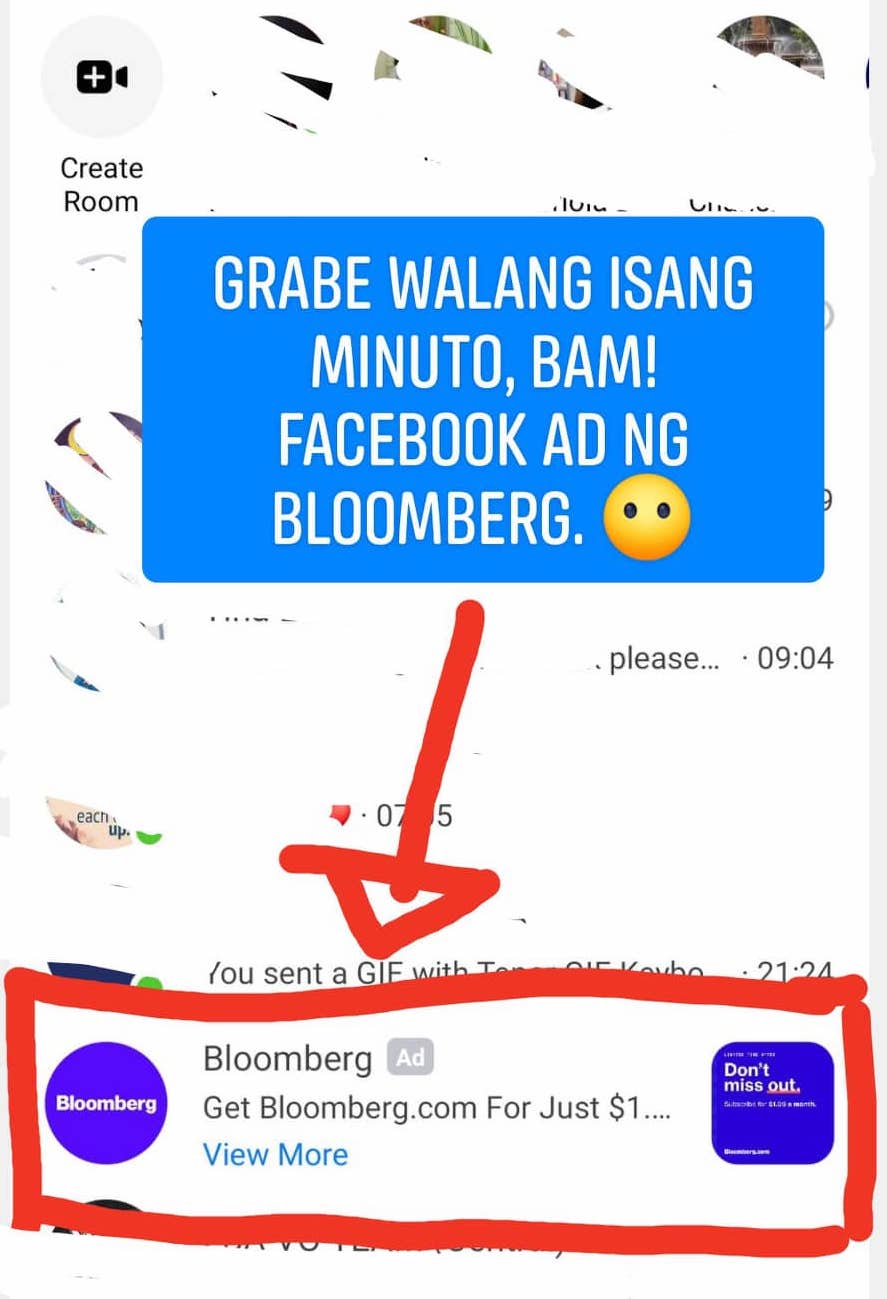
And there it was. An ad, right in my feed, inviting me to subscribe to Bloomberg.
Wait. How did that happen? I came from LinkedIn.
Some of you already know exactly what happened here. Let me walk through it anyway, because it’s a better lesson than it looks.
The Pixel Did Exactly What It Was Built to Do
When I read that article on Bloomberg’s website, a small piece of code called the Facebook Pixel was quietly sitting on the page. The moment I landed there, it recorded the action — “she read this article” — and passed that signal back to Facebook. Facebook, in turn, flagged me as someone worth showing a Bloomberg ad to.
That’s it. That’s the whole mystery. No microphones. No eavesdropping. Just a pixel doing its one job very, very well.
For years, this got explained away as something spookier than it actually is. “Facebook is listening to us,” people would joke. A friend of mine and I used to say it, too. We would always say, “Facebook Pixel sa hangin,” as if it were floating in the air, catching our conversations. It may be funny, yet technically that’s not what’s happening at all. What’s happening is quieter and, honestly, more impressive: a system built to notice you, remember you, and show up again before you’ve even decided you need it.
Next time you see an ad right after reading an article, looking at a product page, or chatting with a friend, don’t be surprised. Well, I don’t think you’re still surprised by any of that now; it’s almost normal. There’s usually a much less magical explanation than mind-reading — and a much more useful lesson underneath it.
The Lesson Isn’t About Facebook. It’s About Being Remembered.
Here’s what I learned long after that ad stopped feeling strange: the businesses and experts who stay top of mind aren’t the loudest ones. They’re the ones who show up consistently, in more than one place, right around the moments when someone is already paying attention. Yes, they would even use ads to show up.
The pixel didn’t sell me anything that day. It just made sure I saw Bloomberg again, somewhere else, shortly after I’d already shown interest. That’s the whole game. Not one big moment of visibility — repeated, well-timed reappearances that build familiarity before a decision ever gets made.
That is also true for expertise. Most of us don’t need a mysterious algorithm to do this for our own authority; we need a system. The podcast episode you created, the interview you conducted, and the information you shared in a client call can all target your audience again like the Bloomberg ad targeted me. Not by using code (or ads), but by reusing ideas: take the same idea and present it in a new way, in a new spot, until people trust it.
The difference between a business owner who stays invisible and one who becomes the obvious choice usually isn’t better ideas. It’s better follow-through on the ideas they already have. If you’ve got expertise sitting in one place (one podcast, one post, one conversation) and you’re wondering how to make it show up the way that Bloomberg ad showed up for me, that’s exactly what the 30-Day Authority Content Blueprint walks you through. It’s a simple system for turning one piece of content into the kind of consistent, repeated visibility that builds real trust over time — no pixel required.
Grab it here, and let’s make sure your best ideas don’t disappear after a single use.
0 Comments